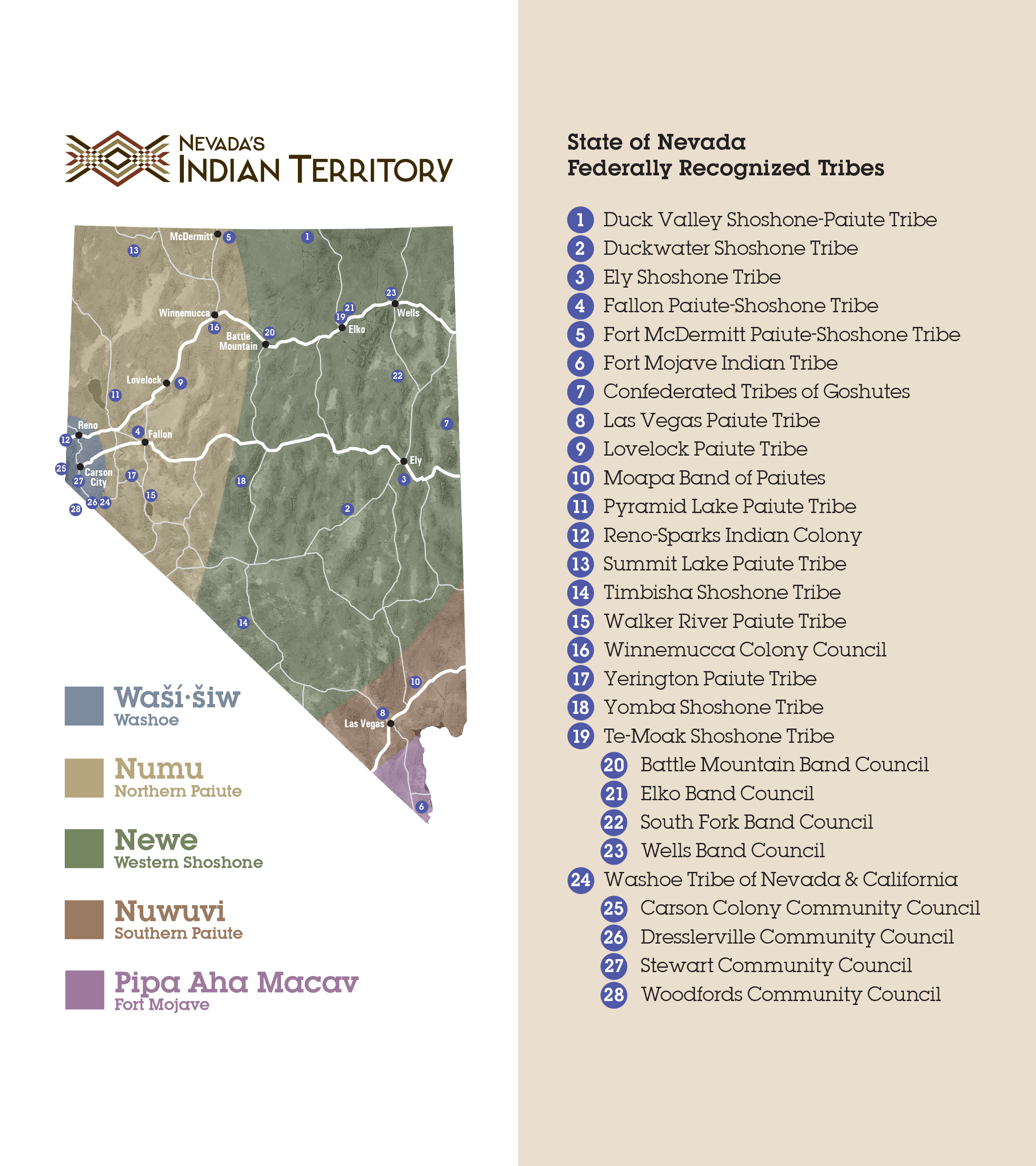
Nevada’s vast landscapes are not just home to majestic mountain ranges, pristine lakes, and awe-inspiring deserts—they also hold the stories and traditions of 28 Indigenous tribes who have lived in harmony with the land for thousands of years. These tribes invite visitors to explore their homelands, share in their cultures, and embrace eco-cultural tourism, a growing movement that emphasizes sustainability, respect for the environment, and an authentic connection to Indigenous heritage. From the Washoe in the north to the Mojave in the south, each tribe offers unique experiences rooted in a commitment to preserving the land and their way of life.
This story was created in partnership with Nevada’s Indian Territory.
Washoe People (Waší∙šiw) – Guardians of Lake Tahoe
The Waší∙šiw, or Washoe people, have called the shores of DáɁaw, pronounced “Da-oh” (Lake Tahoe) and its surrounding landscapes home since time immemorial. Visitors can immerse themselves in the Waší∙šiw ɁitdéɁ (Homelands of the Washoe People) by exploring destinations like Lake Tahoe, the Lake Tahoe Basin, Carson Valley, Truckee Meadows, and the Pine Nut Mountain Range. The Washoe invites guests to explore their incredible homelands and take part in their culture while respecting and caring for the environment. The DáɁaw Pledge encourages responsible visitation of Lake Tahoe’s pristine shoreline, ensuring that the land is left better than it was found.
The Washoe Tribe also offers visitors the chance to engage with their culture through events like the Waší·šiw ɁitdéɁ Indigenous Culture and Arts Festival, or a Story Walk experience along the Tahoe Rim Trail. Visitors can also visit Meeks Bay Resort for camping, fishing and beach activities as well as the opportunity to enjoy cultural sites, traditional artwork and Waši·šiw cultural and environmental restoration projects. Be sure to stop by the Taylor Creek Visitor Center, where a trilingual audio tour deepens the cultural connection and you can see the traditional fishing site for Lahontan Cutthroat Trout.
In the Carson City area, visitors can explore several sites that deepen their understanding of Indigenous history and culture. The Stewart Indian School Cultural Center and Museum offers a glimpse into the stories of students who attended the school, while the Stewart Indian School Trail provides a self-guided walking tour of the campus, highlighting its historical significance. At the Nevada State Museum, the ‘Under One Sky’ exhibit presents the Native perspective on the region’s history, using their own words to share their cultural heritage. The Carson Valley Museum and Cultural Center further complements this experience with exhibits focused on local Indigenous history. Nearby in Reno, the Nevada Museum of Art showcases Native American works in its permanent collections and special exhibitions, connecting traditional art forms with contemporary Indigenous artists. For a memorable cultural event, visitors can attend the Stewart Father’s Day Powwow, which brings together Native dancers, drummers, and artisans in a vibrant celebration of tradition and community.
Visiting the Lake Tahoe area and the homeland of the Washoe is the perfect way to blend outdoor recreation like paddle boarding, boating, overlanding, wildlife watching and hiking with unique cultural experiences that will open your eyes to the incredible Indigenous heritage in the area.
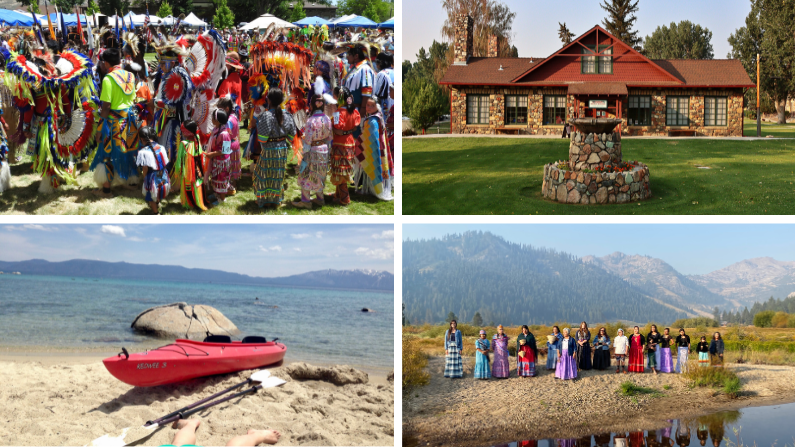
Clockwise: Stewart Father’s Day Powwow, Stewart Indian School Cultural Center & Museum, Indigenous women celebrating the name change of Palisades Tahoe, and a kayak on Lake Tahoe.
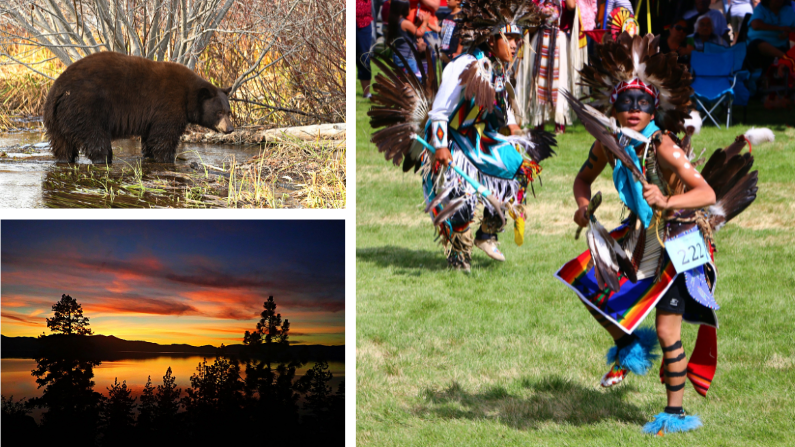
A black bear in the wild, a traditional dancer at the Stewart Father’s Day Powwow, and Lake Tahoe at sunset.
Northern Paiute People (Numu) – Caretakers of the Great Basin
The Northern Paiute, or Numu (pronounced “Nuh-muh”), have always been stewards of Nevada’s Great Basin region. Their homelands stretch from the serene waters of Pyramid, Walker and Mono Lakes to the rugged beauty of the Black Rock Desert and Summit Lake. There are so many incredible ways to explore the wild spaces in Numu territory, with opportunities for world-class fishing (if you are lucky you may reel in a Lahontan Cutthroat Trout) wildlife watching, hot spring soaking, overlanding, and stargazing. When visiting Pyramid Lake, be sure to learn about the Cui-ui, a prehistoric fish found only in this area! Other great spots to visit include Lovelock Cave, a sacred spot where thousands of artifacts have been found, Grimes Point/Hidden Cave Archaeological Site for breathtaking petroglyphs, and Stillwater National Wildlife Refuge for great wildlife watching. These activities align with Nevada’s Indian Territory mission to protect biodiversity and promote sustainable recreation.
Numu culture is celebrated through a variety of annual events, such as the Numaga Days Festival, the Pine Nut Festival, the Sacred Visions Powwow, the Moving Forward Together Powwow, and the University of Nevada Powwow. The Pyramid Lake Paiute Tribe Museum and Visitor Center offers a window into the tribe’s history and ongoing stewardship efforts. As visitors journey through the Numu homelands, they are encouraged to reflect on the importance of preserving both the land and the culture that thrives within it, guided by the Numu Pledge—a commitment to responsible and inclusive travel for healthy lands and healthy people.
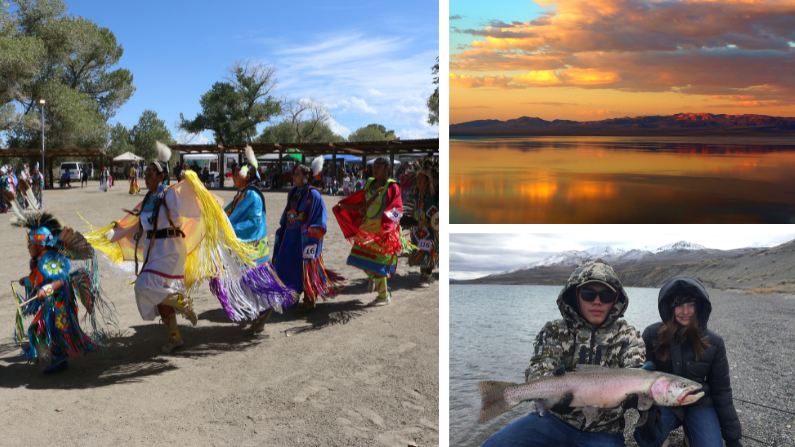
Dancers at the Pine Nut Festival, sunset over Walker Lake, and a young fisherman and fisherwomen with a Lahontan Cutthroat Trout.
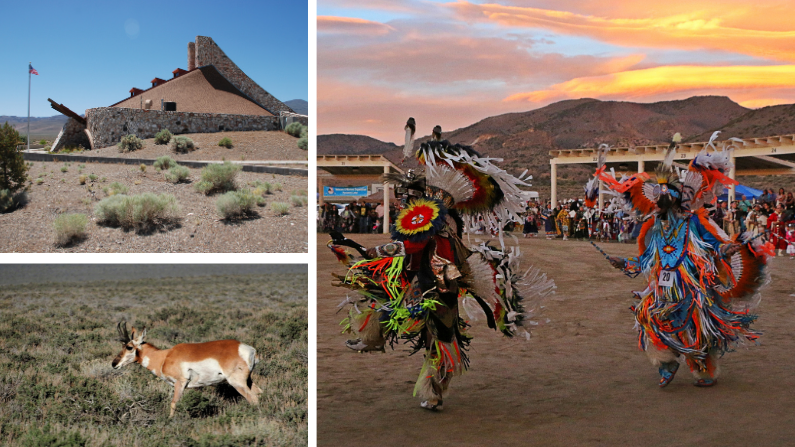
Pyramid Lake Paiute Tribe Museum and Visitor Center, dancers at the Numaga Days Festival, and an antelope in the wild.
Southern Paiute People (Nuwuvi) – Defenders of the Southern Deserts
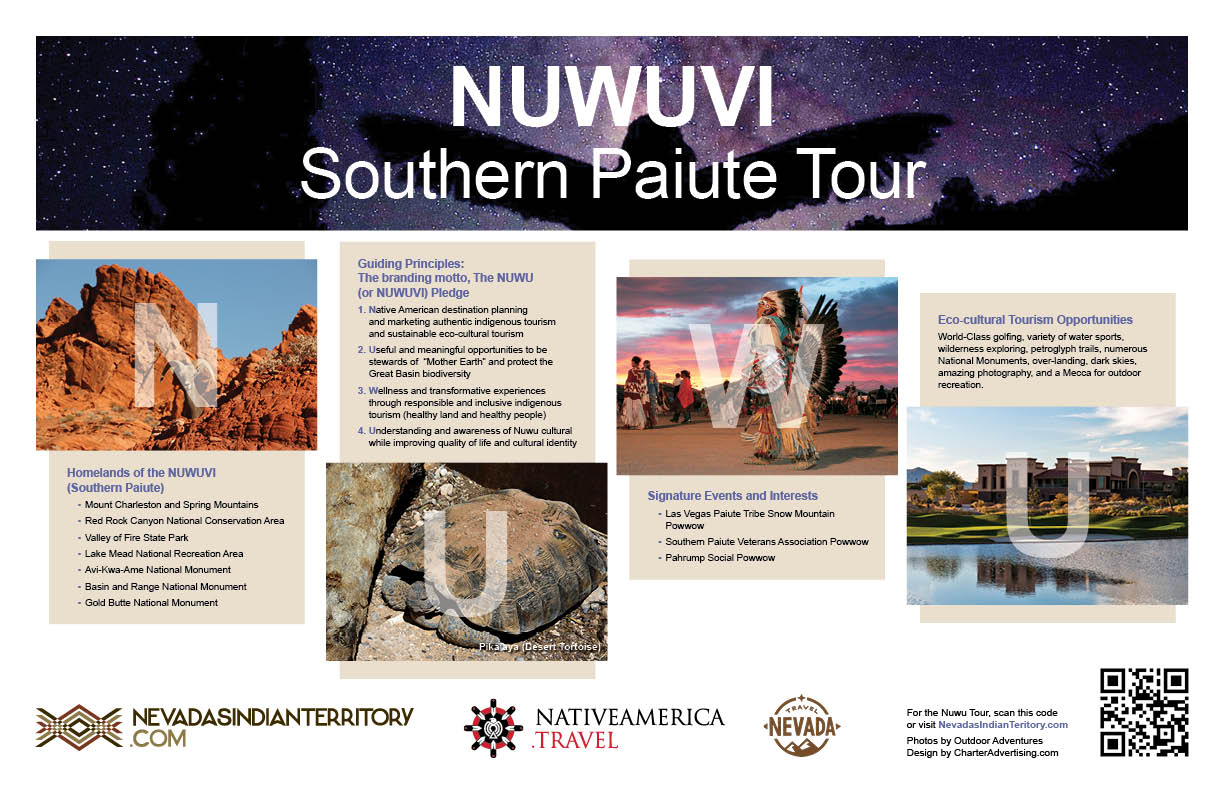
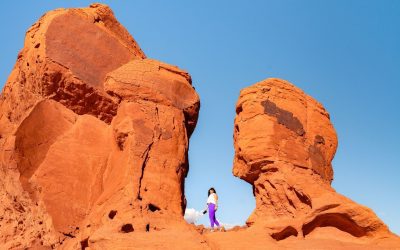
The Nuwuvi, or Southern Paiute, have long inhabited the breathtaking landscapes of southern and southeastern Nevada, including Red Rock Canyon National Conservation Area, Mount Charleston and Spring Mountains, Valley of Fire State Park, Basin and Range National Monument, Lake Mead National Recreation Area, and Ash Meadows National Wildlife Refuge. For the Nuwuvi, the land is sacred and its protection and conservation is of the utmost importance. Visitors are invited to explore the plentiful petroglyph trails, stargaze under some of the darkest skies in the country, golf at the Las Vegas Paiute Golf Resort, watch for wildlife like wild horses, wild burros, bighorn sheep and desert tortoise, rock climb, hike, and so much more all while adhering to the Nuwuvi Pledge.
In addition to outdoor exploration, visitors can delve into Nevada’s Indigenous history and culture by stopping at the Springs Preserve in downtown Las Vegas, where the Nevada State Museum offers exhibits that highlight Indigenous stories and ecological conservation. The Lost City Museum in Overton, dedicated to preserving ancestral Indigenous history, is another important stop, as is the Clark County Museum, which houses artifacts that tell the broader story of Nevada’s Indigenous peoples.
Cultural events like the Las Vegas Paiute Tribe Snow Mountain Powwow, University of Nevada Las Vegas Powwow, and the Pahrump Social Powwow offer an immersive experience into Southern Paiute traditions. Going to a powwow will give you the incredible opportunity to enjoy traditional song and dance, music, food and the thundering heartbeat of the Indigenous communities.
Through Nevada’s Indian Territory’s conservation and cultural preservation efforts, visitors can engage in meaningful outdoor adventures that respect the land and its Indigenous history.

Dancers at the Las Vegas Paiute Tribe Snow Mountain Powwow, a cave on Mount Charleston, a dwelling at the Lost City Museum, and Valley of Fire State Park.

Red Rock Canyon National Conservation Area, the Las Vegas Paiute Golf Course, a hike in Valley of Fire State Park, camping in Valley of Fire State Park, and a wild horse.
Western Shoshone People (Newe) – Protectors of Nevada’s Heartland
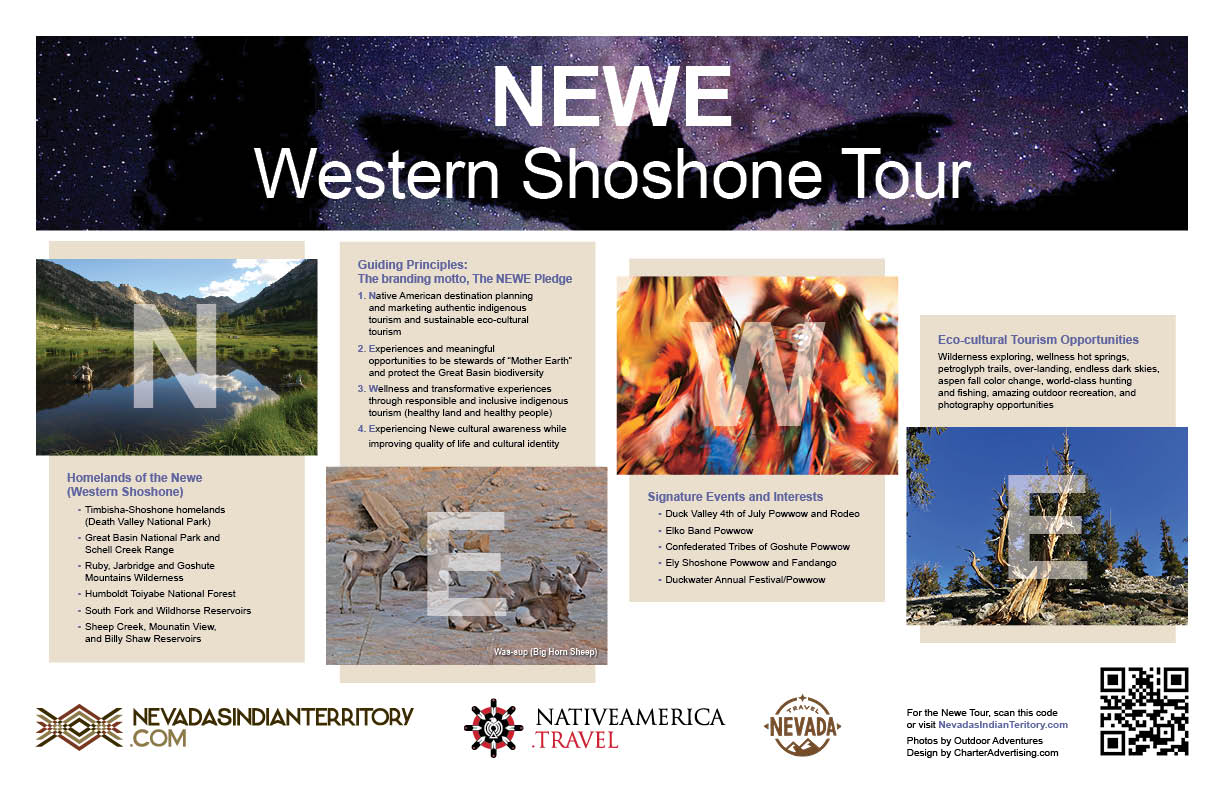
The Newe, or Western Shoshone, have inhabited the rugged heartland of Nevada for thousands of years. Their homelands include the iconic landscapes of Great Basin National Park, Death Valley National Park, the Goshute Mountains, and the Jarbridge and Ruby Mountain Wildernesses. There are plenty of opportunities in Newe territory for visitors to explore these pristine areas while learning about the tribe’s rich cultural heritage. Visitors can enhance their experience by staying at the Timbisha Shoshone Tribe’s new RV park at the southeast entrance to Death Valley National Park, or exploring the striking formations of Cathedral Gorge State Park.
In the Duck Valley Shoshone-Paiute Tribe area, visitors can experience world-class rainbow trout fishing at Lake Billy Shaw, Mountain View, and Sheep Creek Reservoirs, as well as enjoy trophy antelope and elk hunts. The California Trail Interpretive Center in Elko, NV, offers insights into the historical significance of the area, while the Park to Park in the Dark Program provides a unique astronomy route connecting two dark sky parks: Death Valley National Park and Great Basin National Park. With a blend of outdoor adventure and cultural engagement, this region invites exploration and appreciation of its rich heritage.
Events like the Duck Valley 4th of July Powwow and Rodeo, the Elko Te-Moak Powwow, the Ely Shoshone Powwow and Fandango, the Goshute Powwow, and the Duckwater Spring Festival showcase the vibrant traditions of the Newe people. In addition to these cultural celebrations, visitors can enjoy the Newe homeland on trails leading to petroglyphs, wildlife watching, stargazing, dipping in hot springs, hunting and fishing, and exploring the vast wildernesses. The Newe Pledge encourages responsible travel that honors both the land and the people, fostering a deeper connection between visitors and the natural world.

A starry sky over Great Basin National Park, Lamoille Creek in the Ruby Mountains, sunrise in Death Valley, and a wild elk.
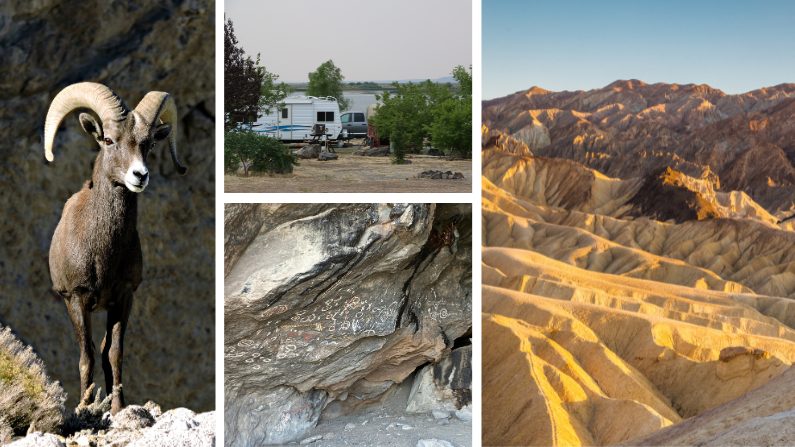
A wild bighorn sheep, camping at Mountain View Reservoir, petroglyphs, and Great Basin National Park.
Fort Mojave People (Pipa Aha Macav) – Stewards of the Southern Colorado River
The Fort Mojave people, or Pipa Aha Macav (which translates to “the People by the River”), have long lived along the southern banks of the Colorado River, where their culture thrives in places like Avi-Kwa-Ame National Monument and Spirit Mountain. This sacred landscape is a must-see for visitors interested in the significant Indigenous culture, the spectacular vistas, and the diverse wildlife. Travelers can explore petroglyphs at Christmas Tree Pass and Grape Vine Canyon, or take part in Fort Mojave Indian Days, an event that celebrates Fort Mojave heritage. Additionally, nearby attractions such as the Mojave National Preserve and the Hualapai Tribe’s famous Skywalk at the western rim of the Grand Canyon offer further opportunities for exploration.
The tribe’s Avi Casino and Resort serves as a modern gateway to the Mojave homelands, providing a range of amenities for visitors Guests can enjoy world-class golf, a full hookup RV park, a variety of dining options, a movie theater, and outdoor pools. The resort’s river beach lounge area offers a perfect spot to relax and soak in the beauty of the Colorado River. The Pipa Aha Macav continue to protect their ancestral lands and share their culture with those who seek to experience the beauty of the southern Nevada desert.
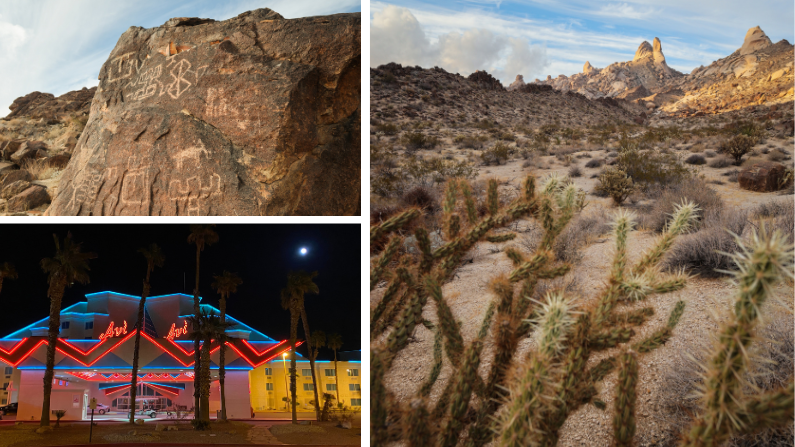
Petroglyphs at Christmas Tree Pass, Avi-Kwa-Ame National Monument, and Avi Casino and Resort.
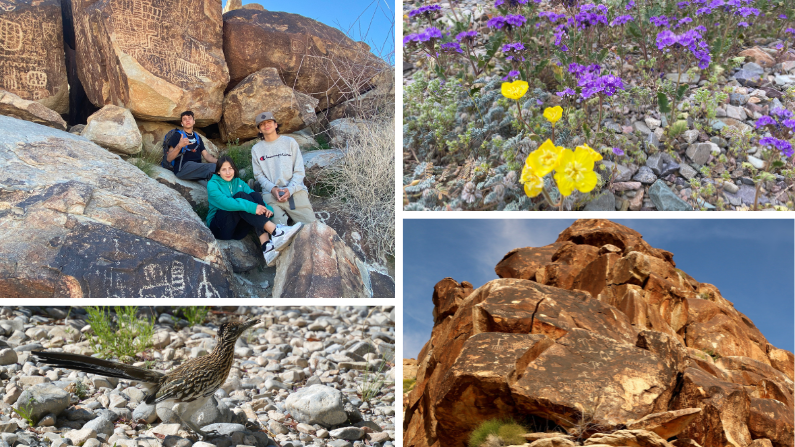
Christmas Tree Pass petroglyphs, a road-runner, and desert flowers.
Nevada Indian Territory offers a unique opportunity for travelers to experience the intersection of culture and environmental conservation. Nevada’s indigenous tribes invite visitors to learn from their ancient wisdom, explore their lands and heritage, and join in their efforts to protect the environment for future generations.
For an even deeper experience, download the Explore Native Nevada app by scanning the QR code here or at NevadasIndianTerritory.com—your insider guide to cultural sites, events, and hidden gems across the state.