Great Sand Dunes National Park, located in Colorado’s scenic San Luis Valley, is where mountains of sand tower over ancestral lands.
A History Lesson on the Great Sand Dunes
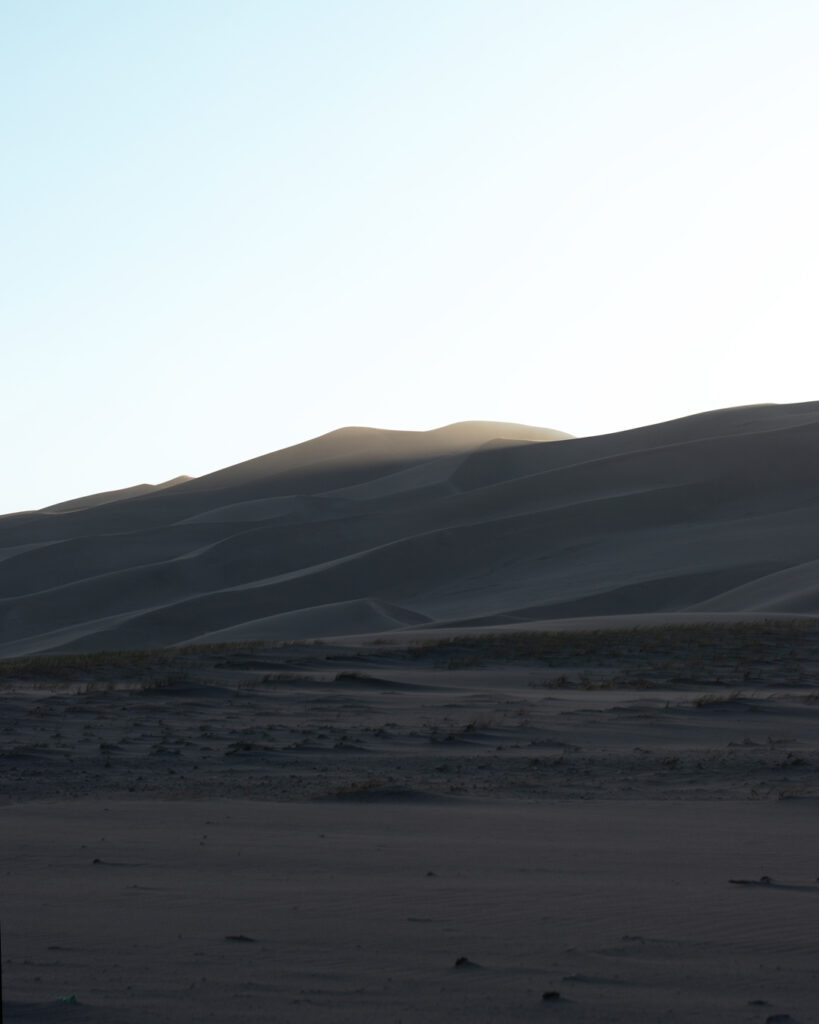
Last light on the approach to the dunes
The Colorado Rockies: An unlimited source of jagged peaks, wind-carved cliffs, and snow-capped vistas. But some of those mountains are a bit softer… literally. Born of a combination of the nearby Sangre de Cristo Mountain Range and winds blowing sediment and sand from nearby receding lakes over the course of more than 10,000 years, the Great Sand Dunes rise (continuously!) out of the plains of Southern Colorado. For some perspective, the highest dunes rise 750 feet from the valley floor, and the area contains over 30 square miles of sand or roughly 14,520 American football fields. In fact, the dune field is larger than Manhattan!
Speaking of land, the Southern Ute tribe were the first people to inhabit the space, followed later by Apache and the Navajo. The latter tribe regards Blanca Peak, which provides a stunning backdrop to the dunes, as one of four sacred mountains. I encourage and urge everyone visiting the dunes to respect the land as both a National Park and sacred ground. Familiarize yourself with the region’s Indigenous history, practice Leave No Trace and visit with respect and gratitude.
Race to Sunrise
From the campground, crawl towards the dunes and shake off whatever drowsiness you had with the excitement of the day ahead’s adventures. The winding descent eventually gives way to seemingly silken gravel and within minutes feet meet sand. It’s now a race to see who makes it to the dunes first; you or the sun?


Blue hour in the Great Sands Dunes
Timing is Everything at Great Sand Dunes
Although the Colorado sand dunes may cover a jaw-dropping amount of land, one of the great features of this National Park is that you can nearly drive right up to them! Medano Creek sits just between you and the dunes after parking in the massive lot. In the spring, the creek houses fresh snow water from the mountains but is easily passable barefoot or with waterproof shoes if the weather permits. I recommend removing your shoes if the weather is good as sinking into the sand is as therapeutic as it gets! Besides, you’ll be making frequent stops to dump your sand collectors… (a.k.a. shoes)!
While the park offers easy access to the dunes, you’ll want to arrive according to how you plan to view them. Here are some of the best times lined up with your plans:
- Sunrise/Sunset from the base of the dunes: Medano Creek and the base of the dunes is just steps from the parking lot. Arrive 15 minutes prior to sunrise or sunset.
- Sunrise/Sunset from the top of the dunes: Want to be traversing the dunes as the sun rises/sets? I recommend leaving the parking lot to start your trek at least 90 minutes prior to either event, as the dunes are no small feat to climb! Bring a good amount of water, and be patient!
Bonus: One of the best places to view the sunset over the Great Sand Dunes isn’t even in the park itself. The two-lane road leading to the entrance has an incredible view of the entire park and surrounding mountains, as well!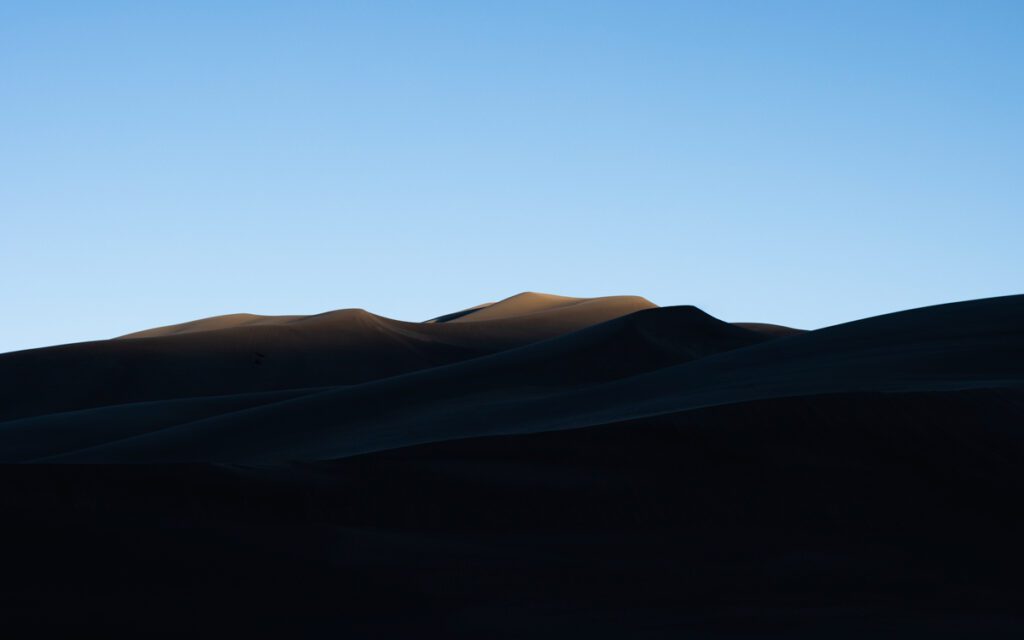
Sunlight illuminates the highest dunes in the park
A Sandy Sunrise
Out of breath, but on time, feet sink with finality into sand with overwhelming satisfaction. Light begins to pour over the mountain range, dipping the highest sandy peaks in pure gold. Enveloped by the sun, you breathe a peaceful sigh as the sun crests over the highest dunes.

Great Sand Dunes National Park Tips:
- Short trip? Come for an overnight stay. The park is equally impressive at night as it is during the day and received a Dark Sky accreditation in 2019. Arrive at sunset, stay for the stargazing, and get up in time for sunrise. Pack in all the best views, colors, and shadows in the perfect 12-hour time frame! Grab a campsite at nearby Zapata Falls Campground or Penitente Canyon Campground or book a stay in the park’s gateway town of Alamosa.
- Protect your eyes! If you plan on going deep into the dune field, pack sunglasses to both shield your eyes and block some of the flying sand, especially if you wear contacts!
- Protect your camera! Keep that lens cap on if you aren’t shooting, and bring a sweater or backpack to conceal it if the winds get crazy, which is likely!
- Have fun! Pack a picnic and bring a sled or sandboard!
- There is also an impressive amount you can do and see aside from the dunes within very close proximity to national park, including backcountry trekking, 4×4 excursions, and nearby hot springs!
- Explore the San Luis Valley in its entirety, including other historic sites, state parks, and areas of Indigenous and ancestral significance.

Milky Way over the road to Great Sand Dunes National Park.
Great Sand Dunes National Park stands as not just a geological wonder but a testament to the boundless beauty and diversity of southwest Colorado. Come prepared to be wowed day and night by sand, sun, and stars.