
Travel Tips
Exploring Indigenous Heritage on the East Coast

Below we have created a guide to exploring Indigenous heritage on the East Coast. It’s important to learn before you travel, participate respectfully and ask permission, support local Indigenous communities, and continue to educate yourself when traveling through Indigenous communities and landscapes. For a more thorough prelude to traveling through Indigenous lands, check out our introduction. Please make sure to travel using Leave No Trace practices in order to keep these sacred places safe and protected for future generations.
We realize that there are many National Monuments and State Parks which have significant Indigenous history and heritage. We have focused on the National Parks in this series for simplicity’s sake.
Hot Springs National Park
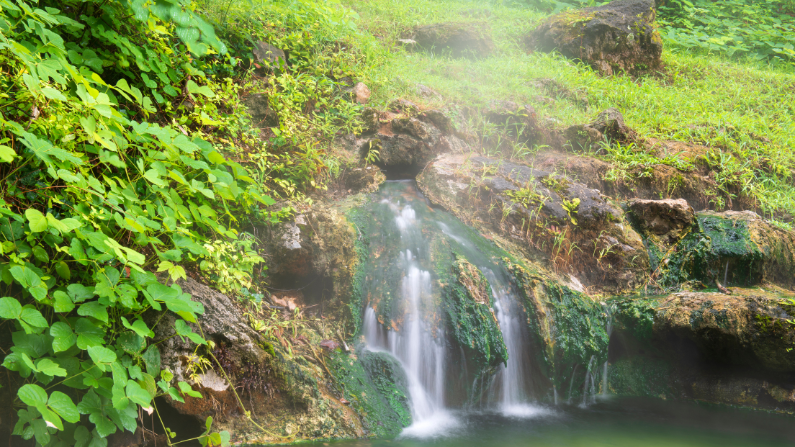
The therapeutic mineral hot springs found in Hot Springs National Park have been drawing people for more than 10,000 years. Long before Europeans came to settle in America, many different tribes came to visit the hot springs to experience the healing properties of the thermal waters. The Indigenous tribes with strong ties to the hot springs and surrounding area are the Quapaw and the Caddo.
To learn more about the Indigenous culture and history of the area, consider visiting the Sequoyah National Research Center at the University of Arkansas in Little Rock, Arkansas. The center is the largest assemblage of Native American expression in the world, including tribal newspapers, poetry, history books, and art. Nearby is the Trail of Tears Park, commemorating the Trail of Tears and the forced migration of the Cherokee, Chickasaw, Choctaw, Creek, and Seminole tribes.

Mammoth National Park
Home to the world’s longest known cave system, thousands of years of human history and a thriving ecosystem, Mammoth Cave is well worth a visit. While Indigenous history of the area dates back more than 12,000 years ago, exploration of the cave system began between 4,000 and 5,000 years ago. The ancient inhabitants of this area mined gypsum, mirabilite, epsomite and other minerals from Mammoth Cave and other caves in the region – archaeologists believe they may have been used for medicinal, agricultural, ritualist, or trade purposes. Ancient burials have also been discovered in the caves, and the park has worked with tribal partners to protect and preserve the deceased. The tribes of today that are connected to the area and the cave include the Eastern Band of Cherokee Indians, Cherokee Nation, the United Keetoowah Band of Cherokee Indians, the Shawnee Tribe, the Eastern Shawnee Tribe of Oklahoma, the Absentee Shawnee Tribe, and the Chickasaw Nation.
To learn more about the Indigenous heritage in this area, we recommend going to a live event like a pow wow or a heritage festival put on by Kentucky Indigenous Peoples. There are a variety of events that occur all year long, and are an incredible way to experience the living, vibrant culture.
Great Smoky Mountains National Park
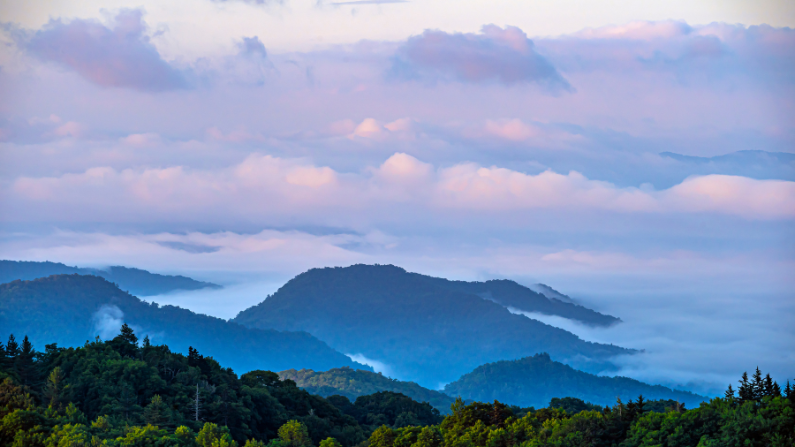
With vast forests, rolling hills and ancient mountains, it’s not a surprise that the Great Smoky Mountains is America’s most visited national park. This mountain range is a special place and a testament to the Indigenous heritage on the East Coast. The Eastern Band of the Cherokee Indians has a deep connection to the land of Southern Appalachia and the Great Smoky Mountains National Park, with their history and culture showcased at the Museum of the Cherokee People in Cherokee, North Carolina. Their traditional society was organized around small communities led by elected chiefs, with a matriarchal structure and a resilient adaptation to European influences. Despite facing hardships like the Trail of Tears, the Eastern Band now thrives on the Qualla Boundary, maintaining both traditional practices and modern lifestyles while welcoming visitors to learn about their heritage and culture.
We’d highly recommend spending some time in the town of Cherokee, NC, where there are plenty of Indigenous attractions, outdoor recreation, shopping and dining. Step back in time at the Oconaluftee Indian Village, listen to Cherokee storytellers around a bonfire, and shop and explore traditional arts and crafts at Qualla Arts and Crafts Mutual Inc. The attractions mentioned above are just the tip of the iceberg, and we recommend spending a couple days here to really dive into the Cherokee culture and experiences. It’s a great spot to stop on a Great Smoky Mountains – Shenandoah road trip.

New River Gorge National Park
The New River is one of the oldest on the continent, and the deep canyons and lush forests of New River Gorge National Park have been visited by and home to Indigenous peoples for more than 10,000 years. Today, this area is considered the ancestral and traditional homeland of the Eastern Band of Cherokee, Shawnee, Seneca Tutelo, S’atsoyaha, and Moneton people. The Eastern Band of Cherokee Indians, forcibly removed from their southeastern homelands in the 1830s, now thrive with around 16,000 members in western North Carolina. Other tribes like the Tutelo, S’atsoyaha (Yuchi), and Moneton also faced displacement, with some, like the Moneton, believed extinct by the late 17th century, while others, like the Yuchi, persist with about 700 members in northeastern Oklahoma, maintaining ancient traditions despite historical adversities.
To explore the rich traditions of Native American communities in the area, we recommend attending the Thunder in the Mountains Pow Wow in Fayetteville, West Virginia.
Shenandoah National Park
Shenandoah National Park has so much to explore, from sweeping vistas to rushing waterfalls and it’s no surprise that this landscape has been traveled through, lived within and inspired people for at least 15,000 years. The Indigenous tribes of today connected with this area include the Five Nations Iroquois, especially the Manahoac, Monacan, and Massawomeck people. The Indigenous peoples of this area have survived systematic erasure and a complex history. For more thorough reading on the history of the area, we recommend the report “Native American Communities of the Shenandoah Valley: Constructing a Complex History” by Dr. Carole Nash.
While in the area, visit the Monacan Living History exhibit at Natural Bridge State Park to learn about cooking, pottery, basket weaving and more activities of the Monacan people. You can also take a tour at the Monacan Indian Nation Museum in Amherst, Virginia, or enjoy the vibrant, living culture at the Monacan Indian Nation Powwow just south of Amherst.


Congaree National Park
Did you know that Congaree National Park has the largest intact expanse of old growth bottomland hardwood forests remaining in the southeastern United States? These forests once covered approximately 30 million acres, but due to logging and land clearing there are only small remnants of these kinds of diverse ecosystems left.
The fertile landscape and park was named for the Congaree people who once lived in the region, though not much is known about them as the majority of their population was decimated in the 17th and 18th centuries by warfare and disease. The remaining Congaree were absorbed into the Catawba tribe, which is still present in the Carolinas today. The Indigenous peoples that share a connection to this area include the Cherokee, the Creek or Muskogee, and the Catawba. To learn more about the Catawba people, consider visiting the Catawba Cultural Center and Trading Post in Rock Hill, South Carolina.
Everglades National Park
The largest subtropical wilderness in the United States, Everglades National Park protects many rare and endangered species of animals, is a World Heritage Site, an International Biosphere Reserve, a Wetland of International Importance, and a wealth of Indigenous heritage on the East Coast. Some of the first known people to inhabit this area included the Calusa, the Tequesta, the Jega and the Ais tribes, with the Calusa being the most dominant. They depended on fishing and systematic foraging for food, created shell works (large scaled architecture using empty shells), intricate ceremonial artwork and had a complex and organized political system. Unfortunately, their population was decimated by European diseases in the late 1700s. The remaining Indigenous peoples retreated farther into the Everglades or migrated to Cuba.
The Indigenous tribes of today that have deep connections with this unique landscape include the Seminole and the Miccosukee peoples. The Miccosukee were originally a part of the Creek Nation, and Seminoles trace their ancestry to the ancient Indigenous people of Florida (Calusa, Teqesta, Ais, Apalachees, and others) and to the Muscogee Creek and other Indigenous migrants from Georgia and Alabama who came to Florida in the late 1700s.
To learn more about the Seminole people, take a visit to the Ah-Tah-Thi-Ki Museum on the Seminole Reservation, home to more than 200,000 works of art and historic objects. For an Indigenous perspective on the incredible land and waterscapes of the Everglades, we’d recommend taking a guided airboat tour through the Everglades and Miccosukee tribal lands with Buffalo Tiger Airboat Tours, owned and operated by the Miccosukee People.
Biscayne National Park
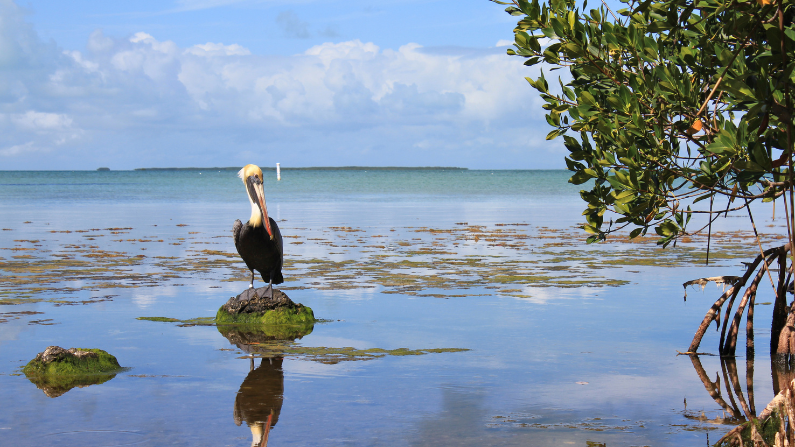
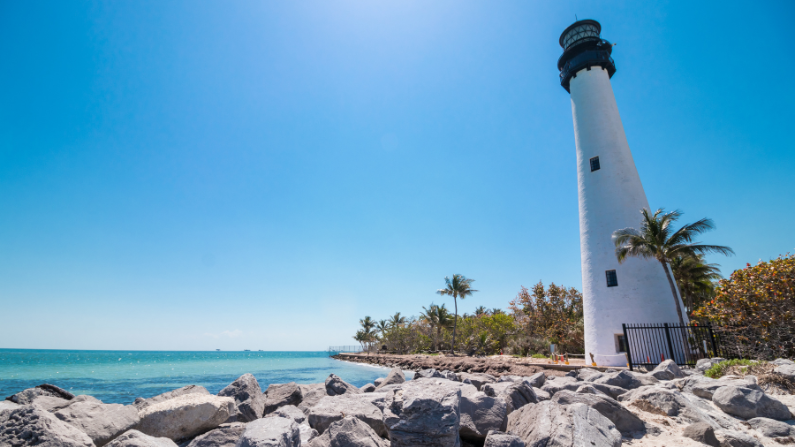
As one of the more unique national parks of the southeast, Biscayne National Park is just a stone’s throw away from Miami. This park is known for its mangrove-lined shorelines, crystal clear waters, and colorful coral reefs. Human history here began over 10,000 years ago, though much evidence of these people may be at the bottom of Biscayne Bay. The people of this area became more settled and less nomadic around 2,500 years ago and more distinct cultures formed, one of the foremost being the Tequesta Indians, who contributed significantly to Indigenous heritage on the East Coast today.
The tribes of today that have deep-rooted connections and history to the lands and waters of Biscayne National Park are the Tequesta, Msupa, Taino, and Seminole people. To learn more about the history of these people and the area, we’d recommend visiting the HistoryMiami Museum in downtown Miami. Be sure to check out the permanent exhibit “Tropical Dreams: A People’s History of South Florida,” which features artifacts from the Miami Circle, an important Tequesta landmark.
Dry Tortugas National Park
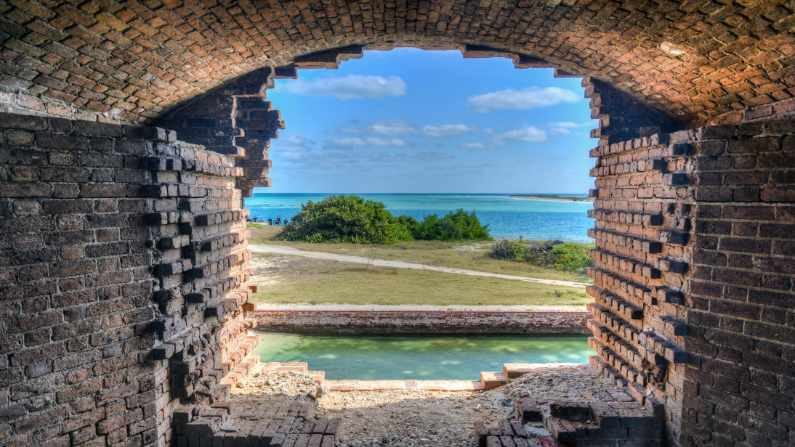
Dry Tortugas National Park’s 100-square miles is mostly open water with seven small islands and is only accessible by boat or seaplane. This tropical destination is a great national park to visit in the winter months when you need a break from the snow and cold. The most prominent feature on the islands is Fort Jefferson, an unfinished fort built and abandoned in the mid 1800’s to protect one of the most strategic deepwater anchorages in North America.
Due to their remote location about 70 miles west of Key West, these islands were probably not well populated during precolonial times. The islands and waters that make up the park are the historical and ancestral lands of the Seminole Indians. To learn more about the history of these people, plan an excursion to Indian Key Historic State Park. This spot is only accessible via a kayak launch, so make a day out of it!

Acadia National Park
The most northern national park on the East Coast, Acadia National Park is known as the Crown Jewel of the North Atlantic Coast. Its rocky headlands, stunning coastline, and rich history make this park a must visit on your next Maine road trip. This area is a statement to Indigenous heritage on the East Coast – Indigenous people have inhabited this area for more than 12,000 years, and the tribes of today connected with this land are the Maliseet, Micmac, Passamaquoddy, and Penobscot, collectively known as the Wabanaki, or “People of the Dawnland.”
Acadia National Park once banned Wabanaki sweetgrass harvesting, but in 2015, new regulations allowed federally recognized tribes to gather certain plants, revitalizing Indigenous cultural practices. Additionally, the park collaborates with the Abbe Museum to host the Cultural Connections in the Park program, fostering community engagement and cultural exchange. This program runs all summer, and we’d recommend adding it to your Acadia National Park itinerary.

Want to learn more about Indigenous heritage across the rest of America? Check out the other articles in our series:
Indigenous Heritage in the Rocky Mountain West