While there are significantly more certified Dark Sky parks in the western United States, there are some stellar places to visit if you’re east of the Mississippi, too. Each of these places holds significant natural beauty and have taken steps to reduce light pollution, earning each an official Dark Sky designation for their commitment to preserving the clarity of the night sky.
Visiting Dark Sky Parks
Night sky viewing is best when coordinated with moon phases, the seasons, timing of astronomical events, and the weather. On a cloudless, new moon night (when the moon is not illuminated by the sun) the stars will shine brightest for longest. The best time to see the Milky Way is in summer from June to August, when the brightest portion of this ribbon of stars arcs almost directly overhead from the southwest to the northeast parts of the sky.
1. Cherry Springs State Park
Preserved in a state of near-pristine wilderness, Cherry Springs State Park, deep within the expansive 262,000-acre Susquehannock State Forest of Pennsylvania, offers a glimpse into the past. Remaining almost as remote as it was two hundred years ago, this 82-acre park takes its name from the abundant black cherry trees that once dominated the landscape. For those seeking adventure on foot, the nearby Susquehannock Trail provides 85 miles of backpacking and hiking opportunities.
However, it’s the park’s exceptionally dark sky that truly draws visitors. It’s considered one of the best places for stargazing in the eastern US. The park’s “astronomy field” offers an unobstructed 360-degree view where the Milky Way, planets, and faint celestial phenomena are visible with remarkable clarity.
Traveler Tip: The park hosts two major star parties each year, attracting several hundred astronomers, the Cherry Springs and Black Forest star parties.
2. Mammoth Cave National Park
In the heart of Kentucky, Mammoth Cave National Park has the world’s longest known cave system at 412 miles. In addition to underground accolades, it also boasts a stunning night sky. It’s both a UNESCO World Heritage Site and an International Dark Sky Park and is within a day’s drive of half of the US population.
Beyond exploring the subterranean wonders, visitors can hike through lush lower Appalachian forests, canoe along the Green River, enjoy ranger-led programs, and explore beyond the park along the Kentucky Bourbon Trail. The park’s remote location and commitment to minimizing light pollution provide exceptional stargazing opportunities, making it a perfect destination for both daytime adventures and celestial exploration.
Traveler Tip: The park offers guided walks and self-guided adventures, and many are accessible and designed to accommodate visitors with special needs.
3. Cape Lookout National Seashore
Situated on the Outer Banks of North Carolina is Cape Lookout National Seashore. It is world-renowned for shelling, fishing, birding, wild horse watching, beach camping, stargazing, and touring the island’s historic structures. The cape’s lighthouse is a prominent structure on the island, one of several ‘guiding lights’ that have marked the coastline for mariners for over 200 years. Although most ships now rely on modern technology, some celestial navigation techniques are still in use. On a cloudless, new moon night at Cape Lookout the canopy of stars is as sparkling as ever and the Milky Way is a dense ribbon of bright stars.
The national seashore is open to the public 24-hours a day but can be accessed only by ferry or private vessel. Several ferry services operate year-round, weather permitting, from various locations along the central coast.
Traveler Tip: The Crystal Coast Stargazers meet regularly each month with some public events held at Harkers Island Visitor Center and nearby Fort Macon State Park.

4. Pickett Civilian Conservation Corps Memorial State Park
Tucked away in the rugged terrain of the Cumberland Plateau in Tennessee, Pickett CCC Memorial State Park offers a serene escape into nature. Its dense forests, sandstone bluffs, and tranquil lakes make the park a haven for hikers, anglers, and nature photographers. During the day, explore the scenic trails and historic Civilian Conservation Corps (CCC) structures. At night, the park’s exceptionally dark skies reveal a breathtaking panorama of stars, planets, and the Milky Way, thanks to its remote location and dedication to dark sky preservation.
Traveler Tip: Park rangers offer in-season, monthly guided night hikes, evening and daytime kayak cruising, and cave tour. Check the event calendar here.
5. Pisgah Astronomical Research Institute
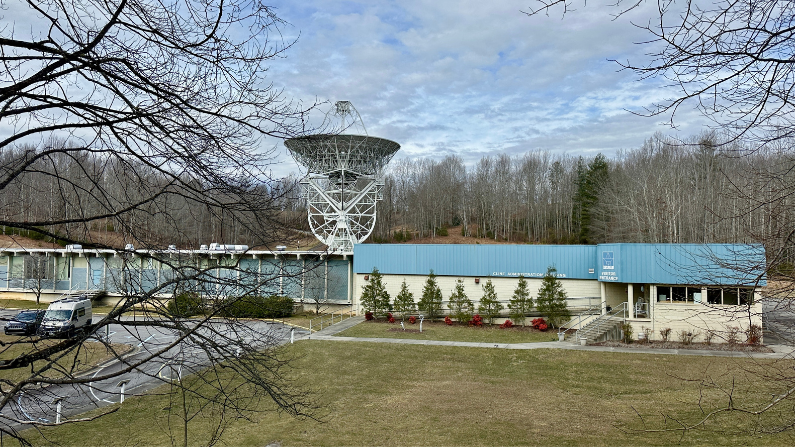
What began as a NASA facility in 1962 as one of the country’s first satellite tracking facilities played a major role in supporting the Apollo moon landing projects. Today Pisgah Astronomical Research Institute (PARI) is a non-profit public organization hosting research and study programs, and inspiring people from “K to Gray” to explore the cosmos. This certified Dark Sky park offers public and private evening viewings with a PARI astronomer with all the necessary equipment. It also houses an extensive collection of terrestrial rocks and minerals and extraterrestrial meteorites, including a florescent tunnel that lights up glow-in-the-dark rocks.
PARI is in the Pisgah National Forest in the Blue Ridge Mountains and its educational camps offer hiking, camping, fishing, swimming, river tubing, and more, in addition to its scientific activities like night sky observation, rocket building, and robot racing.
Traveler Tip: Visits are by appointment or during scheduled self-guided tour days or night sky viewing sessions. Check the schedule here.
6. Natural Bridge State Park
On land once owned by President Thomas Jefferson, a natural limestone bridge carved by Cedar Creek is the centerpiece of Natural Bridge State Park. Set in lush forests and rolling meadows, the park is a prime example of the area’s karst terrain, characterized by sinkholes and caves. A combination of minimal light pollution and the park’s commitment to preserving nocturnal habitats creates an unparalleled setting for astronomical exploration. After dark, ranger-led programs include sunset hikes, lightning bug encounters, lantern tours under the natural bridge, and stargazing sessions.
Traveler Tip: Walking under the bridge along Cedar Creek Trail to Lace Falls, a 50-foot cascade, requires navigating a stairway with 137 steps from the park’s visitor center.
7. Staunton River State Park
In the heart of southern Virginia, Staunton River State Park (pronounced “Stan-tin“) lies at the confluence of the Staunton and Dan rivers that drain into the Kerr Reservoir. Known as Buggs Island Lake by locals, it is the largest lake in Virginia and famous for the diversity, number, and size of fish in its waters. Set in lush woodland, the park’s historic structures, including the cabins, visitor center, and picnic shelters, were built by the Civilian Conservation Corps (CCC) in the early 1930s and remain largely unchanged.
The clarity of the night sky remains unchanged too. The park’s efforts to protect its cultural and natural treasures resulted in Dark Sky Park certification in 2015. Today the park hosts guided stargazing sessions during the summer months, special astronomical events, and annual star parties presented by the Chapel Hill Astronomical and Observational Society.
Traveler Tip: Telescope rental is available at the park; and the park’s astronomical observation field is open to guests year-round.
8. Mayland Earth to Sky Park & Bare Dark Sky Observatory
The Mayland Earth to Sky Park is one of only two facilities in the world to have a planetarium and an observatory. Located in the Appalachian Mountains of western North Carolina its Bare Dark Sky Observatory has a sweeping 360-degree view of the surrounding landscape and overhead night sky. Under the retractable roof of the observatory is the largest telescope in the southeastern US dedicated to public use.
On the park’s main grounds is the Arthur Planetarium, a 36-foot projection dome with 60 seats and wheelchair accessability, showing traditional astronomy shows, laser light shows, and Science Technology Engineering Mathmatics (STEM) education programs. On the dome’s exterior walls is a magnificent mural depicting bees and other night pollinators by artist Matthew Willey. It’s part of his “The Good of the Hive” series of murals worldwide.
Other facilities include a visitor center, conference center, aquaponics lab, and a children’s discovery center. This environmental education park seeks to create “an immersive experience that covers all aspects of conservation from the earth to the sky.”
Traveler Tip: The planetarium astronomy show tickets are purchased at the door. Laser light show tickets must be reserved in advance. Check the schedule here.