Illinois is often defined by the city of Chicago, but the state’s full story is revealed through museum halls, historic highways, and landscapes that inspire exploration. From world-class culture on the shores of Lake Michigan to the quiet wetlands and rock formations of southern Illinois, the Land of Lincoln offers a journey shaped by both human and natural history.

This story was created in partnership with Enjoy Illinois.
Chicago: Putting Illinois on the World’s Stage
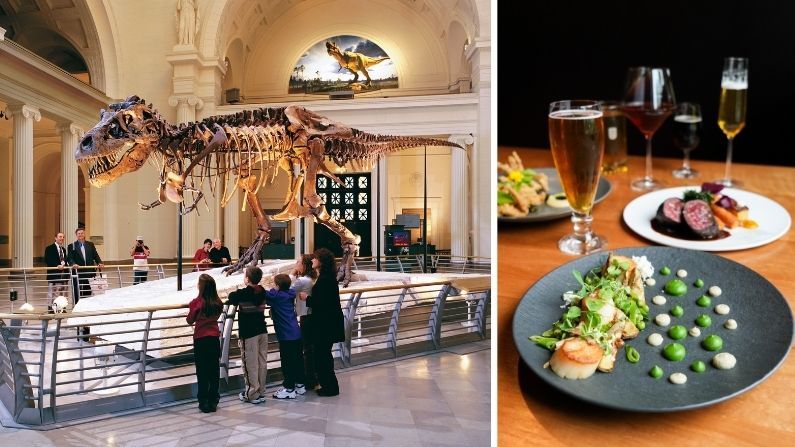
Chicago sets the tone for Illinois as a state with global influence and creativity. Situated on the shores of Lake Michigan in the Great Lakes region, Chicago’s museums and landmarks reflect the cultural and historical forces that have shaped the nation. The Art Institute of Chicago anchors the city’s arts scene, housing works that span centuries and continents. Nearby, the Field Museum connects visitors to global treasures and human history, while the Griffin Museum of Science and Industry reflects Chicago’s long relationship with innovation. Chicago’s food culture embodies its diversity. Dining here is not about chasing trends, but about showcasing creative culinary influences. Restaurants like Shanghai Terrace and Michelin-starred restaurant Indienne draw on international inspiration, while Girl & the Goat and Michelin-starred restaurant Moody Tongue highlight the city’s inventive edge.
Water plays a central role in the experience of Chicago. Architecture boat tours along the Chicago River offer a clear view into the city’s urban landscape, while paddling on Lake Michigan provides an opportunity to connect with nature while enjoying views of Chicago’s skyline. With its wide array of activities for every visitor, it’s no wonder that Chicago is globally recognized for architecture, culture, and innovation.

Where the Mother Road Begins
Chicago is also where one of America’s most storied roads begins, running for over 300 miles (485 km) through the state. As the eastern launching point of U.S. Route 66, the city marks the starting point of a journey that shaped modern travel culture. With the Mother Road celebrating its centennial in 2026, Illinois’ stretch of the highway takes on added significance as the gateway to one of America’s most iconic travel routes. From the “Begin Route 66” sign in Chicago, the road takes travelers through a series of landmarks that reflect the eras of American life.

Just outside of Chicago, the Old Joliet Prison educates visitors on the social and industrial history of the area and is famously known as a filming site for “The Blues Brothers.” The towering Gemini Giant stands as an ode to the innovations of the ’60s. It was created as “a space-themed Muffler Man” to attract travelers during the Space Race.
Further south, the Route 66 Hall of Fame & Museum and the Illinois State Fair Route 66 Experience provide context for the road’s cultural impact throughout the ages. Quirky stops like the Ariston Cafe in Litchfield—the longest-operating restaurant on Route 66—and the Pink Elephant Antique Mall give travelers the chance to take a bit of nostalgia home.
The Illinois stretch culminates at the Mississippi River, where the Chain of Rocks Bridge stretches across the water, once carrying vehicles westward. Today, visitors can still walk or bike across the old bridge to continue their journey down the legendary highway. In nearby Collinsville, the World’s Largest Catsup Bottle—a quirky 170‑ft‑tall roadside icon and classic photo op—awaits your camera!

Natural Treasures: The Wild Side of Illinois
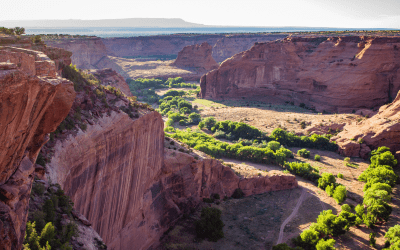
Beyond its cities and highways, Illinois reveals a landscape that invites a slower kind of experience. In the southern part of the state, Shawnee National Forest is home to rolling hills, dense forests, and weathered sandstone formations that feel distinctly different from the prairies and farmland often associated with the Midwest. Here, visitors can explore at their own pace on over 300 miles of hiking, biking, and horseback riding trails. Take your time and discover scenic spots like Garden of the Gods and Little Grand Canyon along the way.
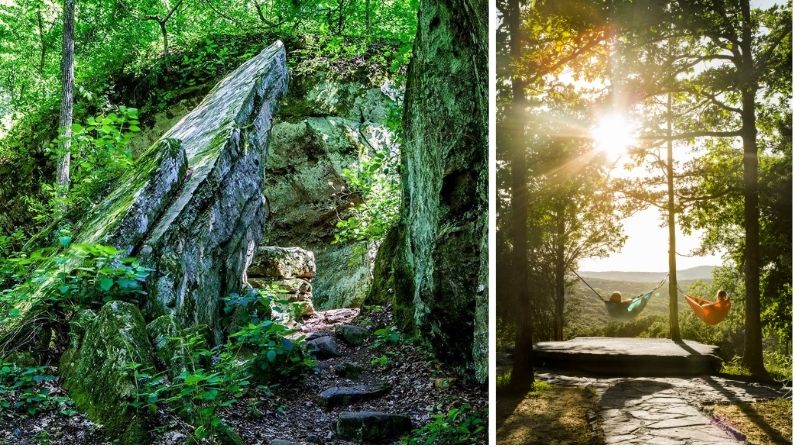
Within the forest, Garden of the Gods rises above the surrounding trees, with sculpted rock towers and overlooks that offer expansive views across the Shawnee Hills. Nearby, Giant City State Park and Cave-in-Rock State Park further showcase the region’s geological record, shaped over time by ancient seas, shifting rivers, and erosion.
The Cache River State Natural Area adds another dimension to southern Illinois’ natural history. Often described as one of the most biologically diverse regions in the state, its protected wetlands support rare plants and wildlife found nowhere else in Illinois. Boardwalks and quiet waterways allow visitors to move through the area with minimal impact, making it a perfect blend of adventure and conservation.
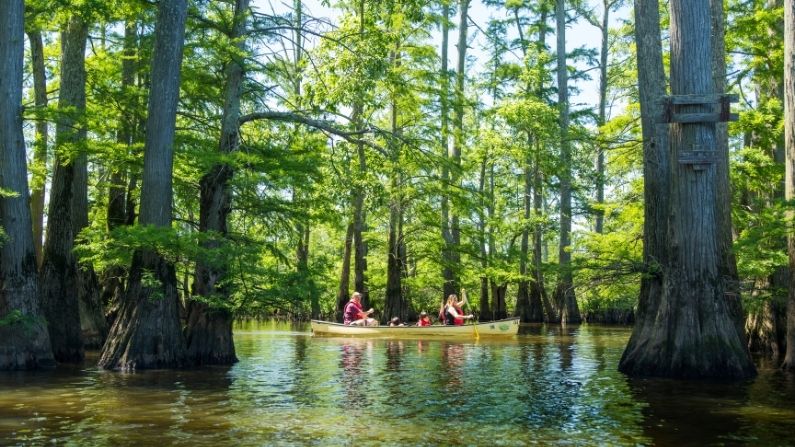
For travelers looking to engage more actively with the landscape, zipline experiences offer a different perspective on the forest canopy and highlight just how varied Illinois’ outdoor experiences can be.
Illinois also offers ziplining at Shawnee Bluffs, rock climbing at Starved Rock, kayaking on the Kaskaskia or Illinois Rivers, and scenic hiking and biking trails. From birdwatching in the Cache River wetlands to ropes courses and paddling adventures, thrill-seekers can also try Long Hollow Canopy Tours, Grafton Zipline Adventures, or The Forge in Lemont for aerial fun. Together, these natural spaces challenge assumptions about this region of the US, representing a state shaped as much by water and stone as by roads and cities.
To commemorate 100 years of Route 66, go explore. Discover Illinois from Chicago to iconic road trips, lush forests, and hidden gems where culture, history, and nature come together.